Culture··6 min read
Secrets of the Palais Garnier: Beyond the Performance
CB
Claire Beaumont
Cultural Affairs Editor
The underground lake, the chandelier crash, and the real Phantom: discover the extraordinary secrets of Paris's most beautiful building and how to experience it at its best.
Charles Garnier's Masterpiece
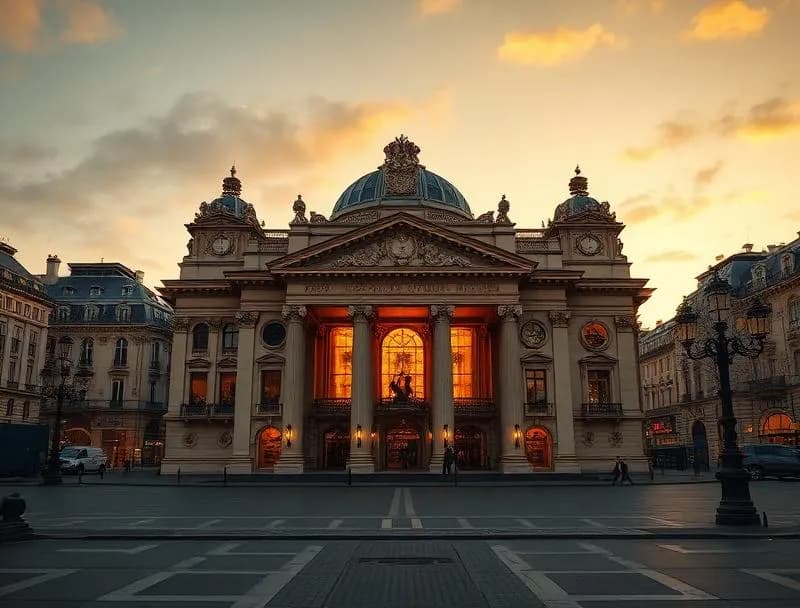
The Palais Garnier is often called the most beautiful building in Paris — and with good reason. Charles Garnier's masterpiece took 15 years to build and remains one of the finest examples of Beaux-Arts architecture in the world.
Garnier was just 35 years old and relatively unknown when he won the design competition in 1861. When Empress Eugénie asked him what style the building represented — was it Greek? Roman? — he reportedly answered: 'It is in the style of Napoleon III, Your Majesty.' The building defies classification, drawing on Renaissance, Baroque, and classical elements to create something wholly original.
The Underground Lake and the Chandelier Incident
The famous underground lake is real. Discovered during construction when groundwater flooded the foundations, it sits beneath the building to this day. It's used by the Paris fire brigade for diving practice.
The chandelier incident of 1896, when a counterweight fell into the auditorium killing a concierge, directly inspired Gaston Leroux's novel 'The Phantom of the Opera' — which in turn inspired the legendary musical.
Chagall's Controversial Ceiling
Marc Chagall's controversial ceiling painting, installed in 1964, replaced the original 19th-century work. It depicts scenes from famous operas and ballets in Chagall's distinctive dreamy style.
The decision to commission Chagall was made by Culture Minister André Malraux and remains contentious. The original ceiling by Jules-Eugène Lenepveu was not destroyed but rather concealed behind Chagall's canvas. Some argue the contrast between the 19th-century auditorium and the 20th-century ceiling is jarring; others find it a brilliant dialogue between eras.
The Grand Foyer and Hidden Labyrinth
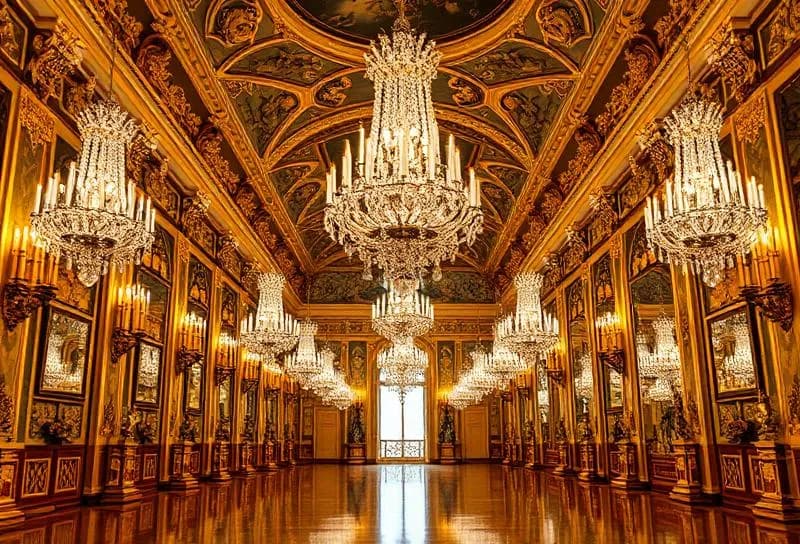
The Grand Foyer, modeled on the Hall of Mirrors at Versailles, is arguably more impressive than the auditorium itself. Its mosaics, gilding, and painted ceilings are a masterclass in decorative excess.
The building contains 7 kilometres of corridors, 2,531 doors, and 7,593 keys. The backstage area is a labyrinth of workshops, rehearsal rooms, and storage spaces that employ hundreds of artisans — wig-makers, costume designers, set painters, and stage mechanics who work with rigging systems largely unchanged since the 19th century.
Attending a Performance at the Palais Garnier
To experience the Palais Garnier at its best, attend a ballet performance by the Paris Opera Ballet, one of the oldest and most prestigious companies in the world. The combination of 19th-century architecture, world-class dancers, and the intimate scale of the 1,979-seat auditorium creates an atmosphere that modern concert halls cannot replicate.
For visitors who want to explore without attending a performance, self-guided daytime tours are available, but the building is at its most atmospheric during an evening event. Arrive early, walk the grand staircase slowly, and spend time in the Grand Foyer before taking your seat — the architecture is as much the spectacle as whatever is on stage.
Daytime Visits and the Gift Shop
The gift shop, often overlooked, stocks beautifully designed items — Art Deco-inspired scarves, prints of the Chagall ceiling, and recordings by the resident orchestra. It is located at the corner of Rue Scribe and is accessible without a performance ticket.
Ready to Experience This?
Let our private chauffeur service transform your French journey. English-speaking drivers, Mercedes S-Class, door-to-door luxury.
Book Your ChauffeurPlan This Journey