Culture··7 min read
Art Deco Paris: A Guided Walking Tour
CB
Claire Beaumont
Cultural Affairs Editor
Discover the stunning Art Deco heritage of Paris, from the Theatre des Champs-Elysees to La Samaritaine, hidden 1920s interiors, and atmospheric bars of the Jazz Age.
The Birth of Art Deco in Paris
Paris in the 1920s was the epicenter of the Art Deco movement. While many associate the style with New York's Chrysler Building, the movement was born in Paris and reached its finest expression here.
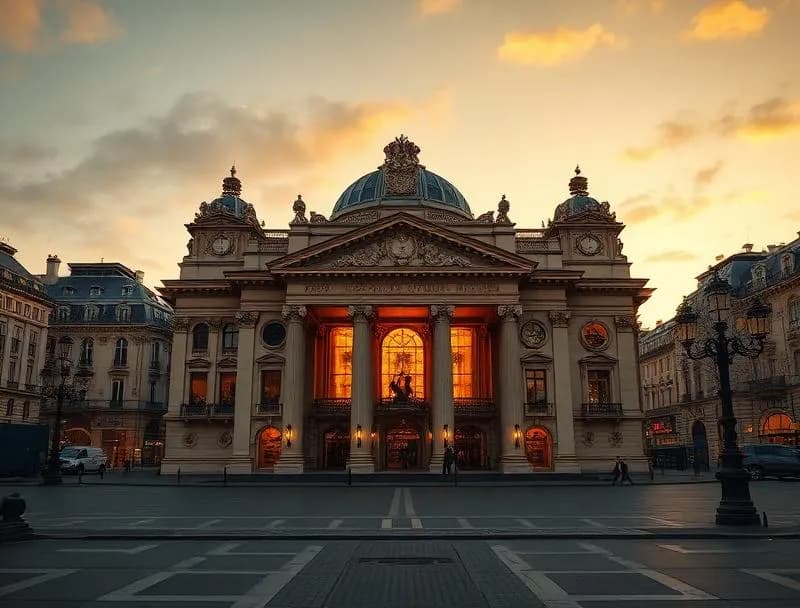
The Théâtre des Champs-Élysées (1913) is considered the first Art Deco building in the world. Its facade, decorated with bas-reliefs by Antoine Bourdelle, announced a new aesthetic that would define an era.
The theatre's interior is equally significant. The auditorium ceiling was painted by Maurice Denis, and the decorative programme throughout the building includes work by Édouard Vuillard and Jacqueline Marval. It was here, in 1913, that the premiere of Stravinsky's 'The Rite of Spring' caused the most famous riot in the history of music.
La Samaritaine: Art Deco Reborn
La Samaritaine, the department store reopened in 2021 after a 16-year closure, showcases extraordinary Art Deco interiors under a stunning glass roof. The top-floor restaurant offers panoramic views of the Seine.
The ground-floor atrium of La Samaritaine, with its peacock-pattern mosaic tiles and ornamental ironwork, is free to enter and worth a visit even if you have no intention of shopping. The building is a rare case where a commercial renovation has actually enhanced the original architectural heritage rather than diminishing it.
Monumental Art Deco: Palais de Tokyo and Trocadero
The Palais de Tokyo and Palais de Chaillot, built for the 1937 International Exhibition, represent the monumental scale of late Art Deco. The Trocadéro gardens between them frame the most famous view of the Eiffel Tower.
Hidden Gems: Hotel Molitor and La Coupole
For hidden gems: the swimming pool of the Hôtel Molitor, now restored as a luxury hotel, and the interior of the Brasserie La Coupole in Montparnasse, with its 33 Art Deco columns, each painted by a different artist.
La Coupole, opened in 1927, was the largest restaurant in Paris and a gathering place for artists including Picasso, Man Ray, Josephine Baker, and Hemingway. The columns were painted by young art students in exchange for meals. Today, the brasserie still serves its legendary curry d'agneau and seafood platters beneath those same columns.
The 16th Arrondissement and Musee des Arts Decoratifs
Other notable stops on an Art Deco tour include the Louxor cinema in the 10th arrondissement, an Egyptian-themed movie palace from 1921 that was restored and reopened in 2013, and the Folies Bergère facade on Rue Richer, a masterpiece of geometric terracotta decoration.
The private apartments and public buildings of the 16th arrondissement contain some of Paris's densest concentrations of Art Deco architecture. The Castel Béranger by Hector Guimard (technically Art Nouveau, but a crucial transition piece) and the apartment buildings on Rue Mallet-Stevens (1927) by Robert Mallet-Stevens are essential viewing for architecture enthusiasts.
Drinking in Art Deco Atmosphere
The Musée des Arts Décoratifs, in the Louvre's Marsan wing, holds one of the finest Art Deco collections in the world. The reconstructed study of couturier Jeanne Lanvin, designed by Armand-Albert Rateau in 1924-25, is a jewel box of lacquer, silk, and bronze that captures the era's obsession with craftsmanship and modernity.
For those who want to inhabit the era rather than merely observe it, cocktails at the Bar Hemingway at the Ritz or the jazz lounge at the Lutetia — both in authentic Art Deco interiors — offer an atmospheric conclusion to the day.
Ready to Experience This?
Let our private chauffeur service transform your French journey. English-speaking drivers, Mercedes S-Class, door-to-door luxury.
Book Your ChauffeurPlan This Journey