Destinations··9 min read
Normandy Beyond D-Day: A Complete Travel Guide
JM
Jean-Pierre Moreau
Luxury Travel Director
While the D-Day beaches are essential, Normandy offers dramatic chalk cliffs, Impressionist landscapes, extraordinary cuisine, and medieval treasures that most visitors never discover.
Beyond the Beaches: Normandy's Hidden Treasures
Most American visitors come to Normandy for the D-Day beaches — and rightly so. But to leave without exploring the rest of this extraordinary region would be to miss some of France's greatest treasures.
The Etretat Cliffs and Literary Heritage
The Étretat cliffs, with their dramatic natural arches plunging into the English Channel, are as breathtaking as any coastline in the world. Monet painted them obsessively, and you'll understand why within seconds of arriving.
Guy de Maupassant grew up in Étretat and set several of his stories here. Maurice Leblanc, creator of gentleman burglar Arsène Lupin, lived in a villa overlooking the cliffs — now a museum dedicated to the fictional detective. The literary connections add a richness to the landscape that rewards those who know the stories.
Honfleur: Birthplace of Impressionism
Honfleur, the picturesque harbor town that launched the Impressionist movement, offers cobbled streets, timber-framed houses, and some of the best seafood restaurants on the entire French coast.
At Honfleur, book a table at Sa.Qua.Na (chef Alexandre Bourdas, two Michelin stars) for a meal that reimagines Norman ingredients through a global lens. For something more traditional, Les Maisons de Léa serves impeccable fruits de mer plateaux overlooking the old harbour.
Norman Gastronomy and the Route du Cidre
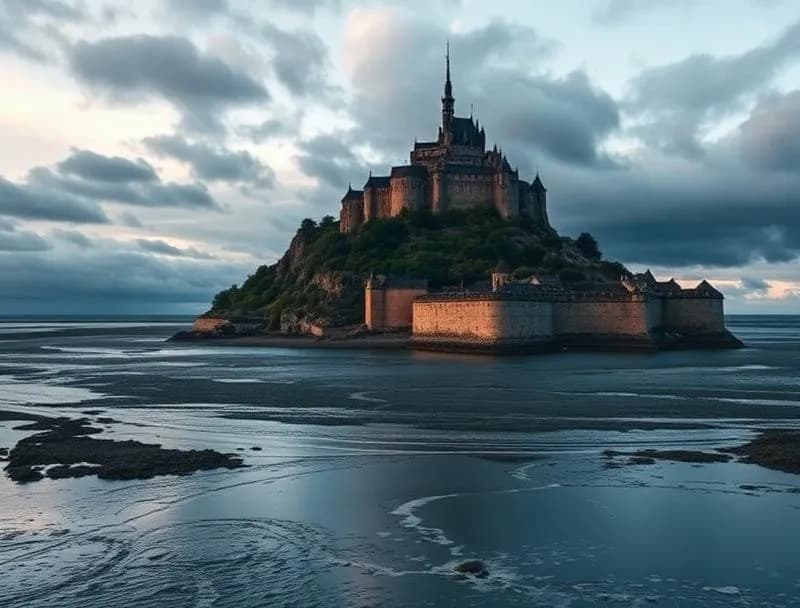
Norman gastronomy is legendary: Camembert, Pont-l'Évêque, and Livarot cheeses; fresh oysters from the coast; apple-based calvados and cidre; and the famous omelette of Mère Poulard at Mont Saint-Michel.
The Route du Cidre in the Pays d'Auge winds through orchards and half-timbered farmsteads where producers offer tastings of cidre, poiré, and calvados. The landscape feels suspended in a previous century — stone troughs, grazing cattle, and blossoming apple trees in spring.
The Bayeux Tapestry and Medieval Rouen
The Bayeux Tapestry, a 70-meter-long embroidered cloth depicting the Norman conquest of England in 1066, is one of the most important historical documents in Europe. It's far more impressive in person than any photograph suggests.
Rouen, the regional capital, deserves at least half a day. The cathedral, painted thirty times by Monet under different light conditions, anchors a medieval old town of timber-framed streets. The Gros-Horloge, a Renaissance astronomical clock spanning a stone arch, is one of the most distinctive monuments in France.
Giverny and Practical Travel Tips
For those interested in gardens, Giverny — Claude Monet's home and garden — sits at the eastern edge of Normandy. The water lily pond and Japanese bridge are instantly recognizable, but visiting in person reveals colors and light that no reproduction captures. April through June is the ideal window.
A practical note on timing: Normandy is at its finest from May through September. The coast can be windy and grey in winter, though the off-season has its own appeal — fewer crowds, dramatic skies, and the satisfaction of having places like Étretat nearly to yourself.
Ready to Experience This?
Let our private chauffeur service transform your French journey. English-speaking drivers, Mercedes S-Class, door-to-door luxury.
Book Your ChauffeurPlan This Journey