Gastronomy··8 min read
The 10 Greatest French Cheeses You Must Try
IF
Isabelle Fontaine
Food & Gastronomy Critic
From the caves of Roquefort to the farms of Normandy, a gastronomic journey through France's most extraordinary fromages. Tasting notes, buying advice, and pairing secrets.
Comte: France's Most Popular Cheese
Charles de Gaulle famously asked, 'How can you govern a country which has 246 varieties of cheese?' The actual number is closer to 1,600, and choosing the greatest is a delicious challenge.
Comté, from the Jura mountains, is France's most popular cheese — and for good reason. Aged for 12-36 months in vast cellars, each wheel develops unique flavors of hazelnut, butter, and caramel.
The Fort des Rousses, a 19th-century military fortress in the Jura, now serves as an aging facility for over 100,000 wheels of Comté. Visitors can tour the vaulted stone cellars where each wheel is turned and tasted by hand. The difference between a 12-month Comté and a 36-month example from the same producer is revelatory — the longer-aged versions develop crunchy crystals of tyrosine and a depth approaching Parmigiano-Reggiano.
Roquefort and Epoisses: Kings of Character
Roquefort, the 'King of Cheeses,' has been aged in the natural caves of Roquefort-sur-Soulzon for over 1,000 years. The specific mold (Penicillium roqueforti) that gives it its distinctive blue veins exists nowhere else on earth.
Époisses de Bourgogne, washed in Marc de Bourgogne brandy during aging, is so pungent that it's reportedly banned on French public transport. But beneath the smell lies one of the most complex and rewarding cheeses in existence.
The art of washing a cheese — applying brine, wine, beer, or spirits to the rind during aging — is one of the most demanding techniques in cheesemaking. Époisses requires washing twice a week for a minimum of six weeks. The result is a soft, spoonable interior with flavors that shift from mushroom to earth to salt to sweetness in a single bite.
Camembert and Beyond: Regional Treasures
Camembert de Normandie (AOC) — the real thing, made with raw milk — is a world apart from the pasteurized versions found in supermarkets. Seek out farm-produced versions in Normandy for the authentic experience.
Beyond these headliners, seek out Reblochon from the Savoie (the key ingredient in tartiflette), Morbier with its distinctive ash line, the tiny buttons of Rocamadour from the Dordogne, and the majestic Beaufort d'Alpage, made only in summer from the milk of cows grazing above 1,500 metres in the Alps.
Paris's Best Fromageries
In Paris, the fromagerie of Laurent Dubois (on Boulevard Saint-Germain) and the legendary Barthélémy (on Rue de Grenelle, supplier to the Élysée Palace) represent the pinnacle of the cheesemonger's art. Tell them your timeline — whether you plan to eat tonight or in three days — and they will select a cheese at precisely the right stage of affinage.
The French Cheese Course: Rules and Wine Pairings
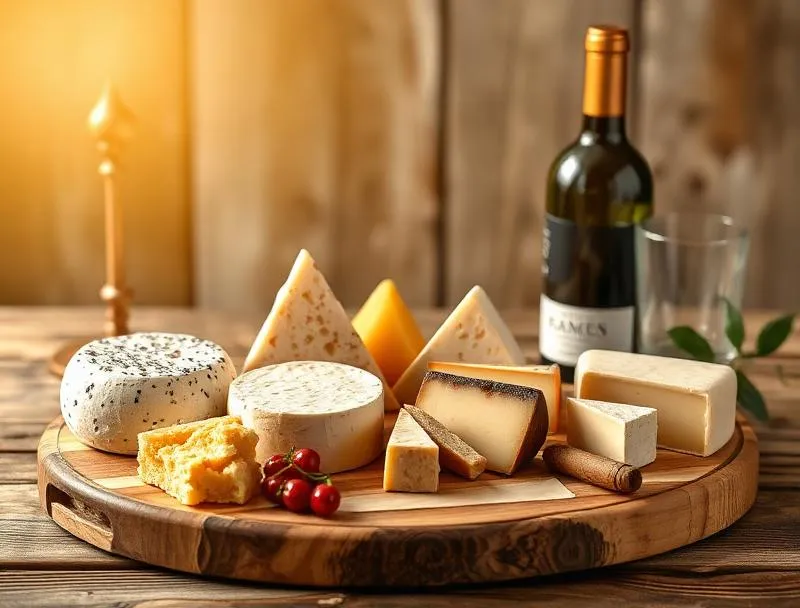
A practical guide to the cheese course: in France, cheese is served after the main course and before dessert, always at room temperature. A proper plateau includes one soft cheese, one hard, one blue, and one goat, accompanied by bread (never crackers) and possibly a few walnuts or dried fruit. The cheese is always passed to the left.
Wine and cheese pairings in France often defy expectations. The classic combination of red wine and cheese is not always ideal — white wines, particularly those with good acidity, often work better. Sancerre with goat cheese, Sauternes with Roquefort, and Gewurztraminer with Munster are combinations perfected over centuries.
Ready to Experience This?
Let our private chauffeur service transform your French journey. English-speaking drivers, Mercedes S-Class, door-to-door luxury.
Book Your ChauffeurPlan This Journey