History··8 min read
Carcassonne & the Cathar Trail: Medieval France
CB
Claire Beaumont
Cultural Affairs Editor
Explore Europe's greatest medieval fortress and the dramatic mountain castles of the Cathar resistance. History, accommodation, the Canal du Midi, and wine-region discoveries.
The Citadel: A Medieval Time Capsule
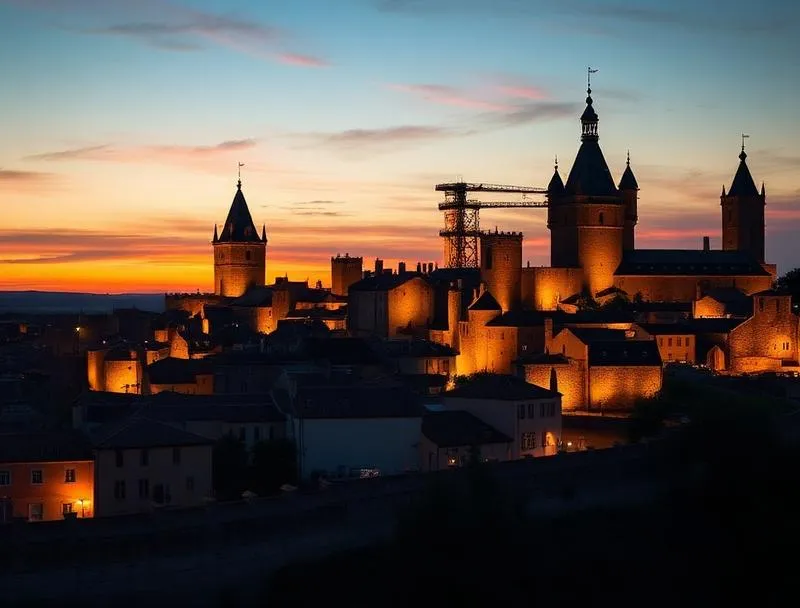
Carcassonne's citadel is one of the most complete medieval fortified cities in Europe. Its double ring of walls, 53 towers, and drawbridge entrance transport you directly to the 13th century.
The restoration by Viollet-le-Duc in the 19th century saved the citadel from demolition and created the fairy-tale appearance we see today. While some historians debate his additions, the result is spectacularly atmospheric.
Viollet-le-Duc's decision to add slate roofs to the towers (the originals were flat-topped in the southern French style) remains the most contentious aspect of the restoration. Nevertheless, UNESCO inscribed the citadel as a World Heritage Site in 1997, recognizing both the medieval fortifications and the restoration itself as culturally significant.
Staying Inside the Walls
Stay inside the walls: The Hôtel de la Cité, built into the medieval ramparts, offers the most magical accommodation. Dining on the terrace overlooking the illuminated citadel at night is an experience you'll never forget.
The Cathar Castles: Mountain Strongholds
The Cathar castles — Peyrepertuse, Quéribus, Montségur, Lastours — perch on impossible mountain ridges throughout the Languedoc. These were the last refuges of the Cathar heretics during the Albigensian Crusade.
The Albigensian Crusade (1209-1229), launched by Pope Innocent III and led by Simon de Montfort, was one of the bloodiest episodes in medieval European history. The Cathars — a Christian sect that rejected the authority of Rome — were systematically persecuted, and their mountain fortresses were besieged one by one. At Montségur in 1244, over 200 Cathars chose to walk into a pyre rather than renounce their faith.
Peyrepertuse, at 800 metres altitude, is the most spectacular of the Cathar castles. Its walls extend along an entire mountain ridge for over 300 metres, and on misty mornings the ruins appear to float above the clouds. The climb from the car park takes about 20 minutes and rewards with views stretching from the Pyrenees to the Mediterranean.
The Canal du Midi: UNESCO Waterway
The Canal du Midi, a UNESCO World Heritage site, runs through the outskirts of Carcassonne. A private boat cruise on this 17th-century masterpiece of engineering is a wonderful complement to the medieval experience.
The Canal du Midi was the vision of Pierre-Paul Riquet, who spent 15 years and his entire fortune building the 240-kilometre waterway connecting the Atlantic to the Mediterranean. The engineering challenges he solved — including the summit canal at the Seuil de Naurouze — were unprecedented in the 17th century. Today, the plane-tree-lined canal is one of the most peaceful waterways in Europe.
Languedoc Wines and a Recommended Itinerary
The Languedoc wine region surrounding Carcassonne is undergoing a renaissance. Appellations like Corbières, Minervois, and Fitou produce bold, sun-drenched reds from Syrah, Grenache, and Carignan at prices that represent extraordinary value compared to northern French regions. Domaine de l'Horizon in Calce and Gérard Bertrand's Château l'Hospitalet near Narbonne are both worth visiting.
A recommended itinerary covers four days: Carcassonne itself on day one (citadel, Canal du Midi cruise, dinner at the Hôtel de la Cité), two or three Cathar castles on days two and three, and the Mediterranean coast at Collioure — the stunning harbour town beloved by Matisse and Derain — on day four.
Ready to Experience This?
Let our private chauffeur service transform your French journey. English-speaking drivers, Mercedes S-Class, door-to-door luxury.
Book Your ChauffeurPlan This Journey