Wine & Spirits··7 min read
Champagne vs. Everything Else: Why There's No Comparison
MD
Marc Dubois
Sommelier & Wine Correspondent
What makes real Champagne different from every other sparkling wine in the world? A master sommelier explains the terroir, technique, and tasting notes that set it apart.
Why Champagne Cannot Be Replicated
True Champagne can only come from the Champagne region of France. This isn't marketing — it's law, and it reflects a unique combination of terroir, climate, and centuries of winemaking expertise that simply cannot be replicated elsewhere.
The secret lies underground. The region's chalk subsoil, formed from ancient sea beds, provides perfect drainage, reflects heat upward to the vines, and creates ideal cellaring conditions at a constant 10°C in the caves below.
The Methode Champenoise Process
The méthode champenoise — secondary fermentation in the bottle — is labor-intensive and time-consuming. Each bottle is individually rotated by hand (or by gyropalette) over weeks to move sediment to the neck before disgorgement.
Non-vintage Champagne must age on its lees for a minimum of 15 months; vintage Champagne requires at least 36 months. In practice, the great houses far exceed these minimums. Krug Grande Cuvée, for example, spends six to seven years on lees before release, resulting in a complexity that is simply unattainable in a wine produced on a shorter timeline.
Visiting the Great Champagne Houses
A visit to the cellars of Moët & Chandon, which stretch for 28 kilometers beneath Épernay, is a genuinely awe-inspiring experience. Millions of bottles rest in chalk galleries carved by hand over centuries.
For a more intimate experience, seek out the grower-producers — the récoltants-manipulants identified by 'RM' on the label. Houses like Egly-Ouriet in Ambonnay, Jacques Selosse in Avize, and Agrapart in Avize produce Champagnes of extraordinary individuality in tiny quantities. Many sell exclusively from their cellars and cannot be found in shops.
The Difference in the Glass
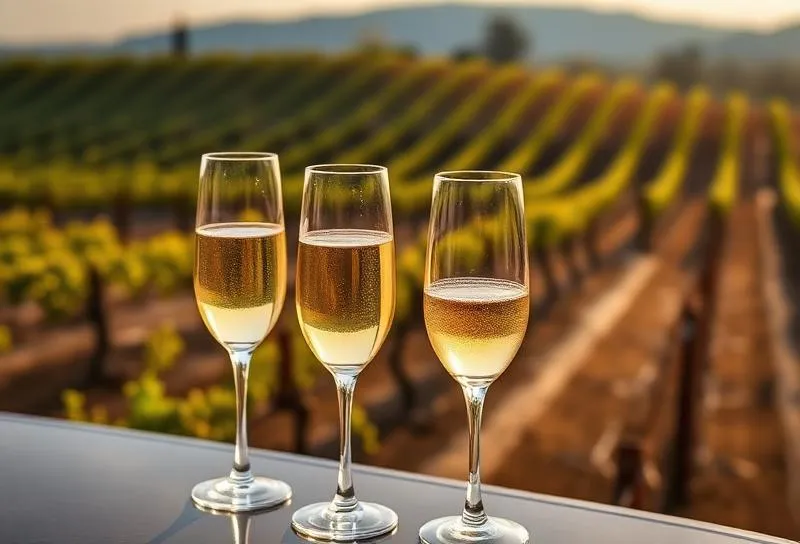
The difference in the glass is unmistakable: finer bubbles, greater complexity, longer finish, and a mineral elegance that no Prosecco, Cava, or Crémant can match. This is not snobbery — it's geology and craftsmanship.
Serving Temperature and Glassware
A word on serving: Champagne is best served at 8 to 10°C in a tulip glass, not the wide coupe (which dissipates the bubbles) or the narrow flute (which concentrates the mousse but restricts the aroma). Temperature matters enormously — too cold and the flavors are muted, too warm and the mousse becomes aggressive.
The three principal grape varieties — Chardonnay, Pinot Noir, and Pinot Meunier — each contribute distinct characteristics. Blanc de Blancs (100% Chardonnay) offers elegance and citrus. Blanc de Noirs (Pinot Noir and/or Meunier) delivers body and red-fruit depth. Most Champagnes are a blend of all three, which is where the chef de cave's art truly lies.
Planning a Champagne Region Visit
To truly understand Champagne, you need to taste it where it's made. A private tour through the region takes you to three or more prestigious houses in a single day, with tastings ranging from entry-level to prestige cuvées costing hundreds of euros per bottle.
The Avenue de Champagne in Épernay — said to be the most valuable street in the world, with billions of euros worth of wine aging beneath it — is the natural starting point for any serious visit. From Moët to Perrier-Jouët to Pol Roger, the houses line up like a masterclass in effervescence.
Ready to Experience This?
Let our private chauffeur service transform your French journey. English-speaking drivers, Mercedes S-Class, door-to-door luxury.
Book Your ChauffeurPlan This Journey